Tuesday, January 30, 2007

The Death of Community

My sense of isolation after talking to the homeless man the other day reminded me of this that I wrote about a year ago. Perhaps a bit more organized discussion of modern isolationism:

Modern advances in transportation and communication have changed many of the basic ways humans live together, by giving people the ability to move and speak long distances with ease. For much of history a most human society was composed of small tribes or towns. People rarely left family and friends behind. The people someone interacted with and saw everyday were the people he had known his whole life.


This is no longer the case. Today the adult American moves many times in a lifespan, and lives far from his extended family and old friends. The people he works around are not the people he lives near, and neither his co-workers or his neighbors are his friends. Our American ideal of "individualism" teaches us that, despite our loves and friendships, life is essentially a solitary act. Our modern cities are usually not large communities, but places where thousands of individuals live in isolation. TV and entertainment distract us from spending time with each other. Instant communications allow us to connect with those we know who are thousands of miles away, but it also allows opportunities to hide ourselves. Long ago an isolated human was an exception; now isolation is the rule.


The isolated modern man can become a master of disguise. He can hide his pain, his failure, his disappointments quite easily. He can present different versions of himself at work, at home, with neighbors, in church, and to distant family and friends thousands of miles away. This is something people years ago who were rooted in tightly-knit communities could not have done very easily. The isolated individual at first embraces this isolation. It protects him from showing his weakness and flaws to others, but before long he realizes that there is no longer anyone who knows or understands him. Before he knows it he has descended into loneliness and despair.

Friday, January 26, 2007

Suspicion and Isolation

Last night I saw a homeless man bundled on a bench downtown, a rare sight here in Kingsport. It was already well below freezing and late. It was obvious the old man would spend the night outside. I remembered that as a younger man I would have gone to help a suffering person, but older and more suspicious I went to my car. I had plenty of space in my warm home, but strangers could be dangerous.


As I drove away I realized that with my wife out of town the standard excuse that “I can't endanger my family to help a stranger” couldn't be used. The fact that I might leave an old man to suffer to defend only my property made me feel a bit sick to my stomach. It was more shame than kindness that made me turn my car around.


“Hi, do you have a place to sleep?”


“No.”


“If you need a warm place to stay tonight, you can stay at my house.”


At first the old man seemed to smile then frowned again. “No thank you.” It was odd to realize that this man who I had so distrusted also viewed me as a potentially dangerous stranger.


“You sure? It's pretty cold.” He nodded. I waved good-bye, “Okay. God Bless.”


The grizzled old man pulled his coat tighter around him. “I have no god but myself. Thank you though.”


I drove home alone, and watched TV until I fell asleep. I used to hate TV, but these days it is my most frequent companion. I'm sure his night on the bench was miserably cold. It is tragic how isolated we have become in the modern world. For social creatures we are extraordinarily distrustful and detached from each other. We shun each other and even shun God. Our individualism doesn't result in much happiness, just coldness.

Saturday, December 30, 2006

The Execution of Saddam Hussein

Saddam Hussein was executed for crimes against humanity last night. Certainly Hussein is an example of the worst sort of criminal, but I cannot help but feel this was pitiful and unnecessary. None of the evil things he did are undone by his execution. He would have died eventually and answered to God for his sins without us taking his life.


In my job I see a lot of people die. I watched a man die at the hospital yesterday. My response to the news was the same as I felt in the hospital: Sorrow. Even with my political opposition to the death penalty, I had not expected to be saddened by the death of someone as horrible as Hussein. I suppose my eyes are too full of seeing death. I want no part in killing, even those who “deserve death.”

Wednesday, December 27, 2006

The Internet and Identity (Dishonesty in blogging)

With all the fuss these days about personal information on the internet, it is interesting to reflect on the "internet self" many of us create for friends or strangers to see. It seems all this self-expression thrown out into the voyeuristic world of the web, often serves more to hide one's self than reveal. Here is a piece of my journal from a few months back:


It is odd to realize, now that I have my website for publishing thoughts I don't write nearly as much as I did before. Each thing I write is analyzed as it is written: How would this fit on my web page? I seem to have lost that freedom of writing without the burden of a potential audience.


My site is personal, but it is not private. While I never cared too much about my privacy, I do care what people think of me. I know people who read it. I want them to continue to think well of me. I want people who visit my site to find it impressive. All the thoughts are mine, but they are a tiny fraction of what I have written in my life. I choose things I think might be interesting or thought-provoking for those who would visit the site.


But isn't it also true that I choose things that might make me look more intelligent, honest, moral, and artistic than I actually am? The things I keep out of the internet version of myself is the lazy, hedonistic, petty, contradictory, and selfish. The digital "Jonathan Davis" contained in Google, Blogger, and MySpace is, I fear, quite different from the man my wife knows. It is perhaps a fiction similar to the "good doctor" I created my intern year. I think I am growing closer now to the doctor I had hoped to be now. Will the discussions on my blog improve me in a similar way? As a young doctor I think the concealment was a necessary part of the process. But is there any need for concealment on the web other than my sense of pride?


I remind myself that I created my site for discussion of ideas not revelation of character flaws. Private writing and prayer to God is the proper place for confession of sins. Neither I do enough of now. I also doubt the honesty of what I have written now, considering I am likely to eventually post it on my site.

Tuesday, December 12, 2006

Monty Python and the Modern World

Perhaps the Brits have the most interesting take on the world in which we live. And now for something completely different:


I just figured out what makes Monty Python so much better than any other light comedy. How sad it is! Beneath all the silly absurdity there is a deep, brooding sadness. What makes all the stupid jokes and acts funny is that it is so self-conscious. An idiotic joke is told and immediately it is ridiculed for its idiocy, then the ridiculer is himself revealed as another bad joke. The show becomes fluid as one skit flows into another, as the characters try to escape each ridiculous skit looking for one that is finally funny, but none of them ever work. The result is hilarious. They make fun of their own inability to make anything really funny. It is like watching an obese person make fat jokes; you laugh even harder because of how pitiful it is. You laugh because you are embarrassed.


Monty Python is the ultimate modern comedy. Ancient Comedies ended with joy and celebration. Monty Python mocks the whole idea of joy. It mocks the idea that a man could be whole or wise.


I had previously tried to explain my deep appreciation for Monty Python humor by saying that it is good satire. The problem is that it isn't good satire. (Anyway I couldn't figure out how satire that mostly focused on British society before my birth would be my favorite comedy.) Satire is never as funny as this. Satire has hope. Satire takes the moral high ground as it laughs at the wrongs of the world. Monty Python is a satire of a satire of a satire ...an endless labyrinth of ridicule. They may laugh at the world but not from a vantage point of wisdom. These modernists are most acutely aware they have no access to wisdom. They demonstrate the absurdity of the world, then they laugh at the absurdity of their own demonstration. In the end the joke is on you. You laugh at yourself. You laugh at the absurdity of yourself. You don't laugh because you are happy; you laugh because you are self-conscious.


Monty Python is more than simple comedy. It is a visual demonstration of the philosophies of despair. Generations before last century wouldn't have understood or laughed. We laughed harder than our parents. Most likely future generations will laugh deeper than us. They may laugh so hard that they cry.


*For more Monty Python you really should see The Spanish Inquisition Show, The Silliest Sketch Ever, or the Philosophy World Cup.

Friday, December 08, 2006

Americans in the Modern World

Americans have always been a reactionary people. We have always reacted strongly to the world, and stirred strong reactions from the world. I don’t think we have quite realized that the modern world with its ills is mostly a creation of our unique republic. Perhaps one of the most interesting things about Americans is how we react to each other, blaming each other for the way the world has become. I jotted down a few impressions about regional America in a gridbook after a road trip a few years back:


Northeasterners despise the modern world in which they live. They see nothing better to do than make money and engage each other in class warfare. They wear black and carry themselves like Europeans, avoiding eye contact with strangers.

The people of the West Coast try to ignore the modern world by creating an imaginary world. They love Mother Earth, technological virtual realities, and produce most of the country's pornography. They try to avoid negative thoughts and trust psychotherapists.

Southerners try to acknowledge the modern world as little as possible, preferring culture that resembles the medieval. Southerners read historical novels, fly offensive Confederate flags, and sing songs that praise "old time religion." They are sentimental, hot-blooded, and irresponsible.

Midwesterners just can't figure out what is wrong with the rest of the country. The Midwesterners don't have problems with the modern world. They can grow up, get a job, get married, and grow old and senile in the modern world without causing such a bothersome fuss. They live where the country is flat. They live with neither mountains nor trees.

Monday, November 27, 2006

Joy

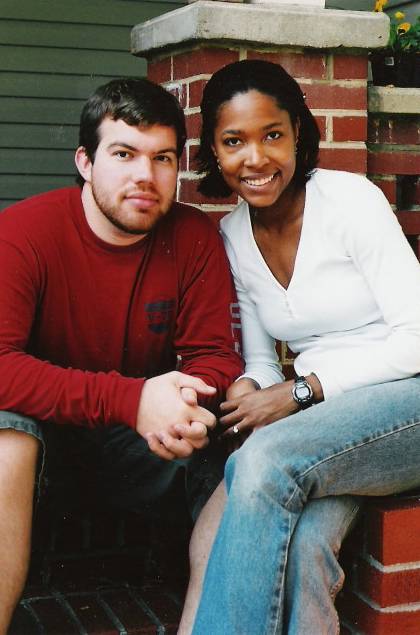
Wednesday is my wife's birthday. For the almost 8 months I have run this blog I have kept the simple commandment “thou shalt not blog about your wife (especially when she is a very private person)”


But with all the other essays and notes I have written in these pages, I cannot let a day like this pass without acknowledging the brilliant and beautiful woman who has shared my life and made me a better man. As she has recently been far away, my appreciation for how blessed I am to be her husband has only deepened.


I wrote the note below in my journal after our first year of marriage. It is even more true now than it was then:


I live an amazing romance –as beautiful as it is improbable. To love each other so passionately and honesty. To have a woman as lovely and wise as my Joy... to look forward and back through the years and see nothing but her smiling face... to always catch her tears when she cries... it is more than anything I could imagine. If I read it in a book or saw it in a movie I would call it a lie –too perfect to reflect any reality. But here I am lying beside her as she sleeps!


*The picture of the little girl is Joy on her 4th or 5th birthday. I always smile when I see it.

Sunday, November 26, 2006

Christmas Gifts

I got what looked like a catalog in the mail the other day. I was about to throw it away with the rest of the junk mail, when I noticed it wasn't quite the "gift catalog" it seemed. Instead of smiling models it was full pictures of ragged children in the third world. The cover advertised it as "gifts for the person who has everything." The catalog was full of gifts to those in need that you can give as a gift to someone you love. The gifts included such much-needed things as goats, blankets, immunizations, pre-natal care for poor people.


It must have caught me at particularly awkward time, because I began to cry right there on my porch. I had come home from work tired and grumpy. Recently my life of isolation has mostly been alternating numbness and self-absorption. The looming chore of Christmas shopping was a only a joyless burden on our strained finances. Now my beloved niece and nephew who have plenty of toys will be getting wheelchairs for disabled kids in the third world for Christmas. Giving such gifts to those who have nothing is a wonderful way to break us out of the materialistic stupor into which we so easily fall.


Much thanks to World Vision for reminding me that the gift we are celebrating is Christ, the birth of redemption and unconditional love into our sad world. Why do I so easily forget Christ?


You can see the catalog here: www.worldvisiongifts.org

Saturday, November 18, 2006

Blood on My Hands (South Dakota)

Most of the fuss over the recent election is likely a lot of noise over nothing, exchanging bad for bad. The real tragedy of this election was the ballot that struck down the South Dakota Abortion Ban. I fear this injustice among us will not end in our lifetime, because in the end we want the ability to terminate those who inconvience us. What finally brought down the ban was that it would protect offspring of rapists from being killed. It reminds me of how even good people want to excuse the deaths of Muslim civilians and children, because they might be relatives of terrorists.

I found something I wrote in the gridbooks during medical school that reflects how I feel today:


On being a pro-life medical student:


Lord Jesus, how eagerly my brothers and sisters rush to shed innocent blood! And I am guilty with them. I cannot deny my hand in this. I have raised my fist and joined in the battle cry of individualism, which deals death the weak, the silent and the inconvenient. How lost we are! How desperately lonely!


And what do I say to them? I understand too well. I have blood on my hands as well. Would I lay down my rights, my life, even my comforts for another person I have never met? I say "yes" but it is only an abstraction. So I am forced to sit and listen as they sing the praises of destruction. I speak, but they respond, "What right do you have?"


I have no right. I am no less a sinner. So I am here among them, alone and shuddering. What have we done? How did we get so lost? Why don't we care about what we have done? How did our compassions become so misguided that even our caring breeds more violence?


How long can this last? How long can we go on neglecting our neighbors and living well at the expense of the weak, poor, and small? The problem is that we can go on this way indefinitely. Our human capacity to misuse each other is almost limitless.

Saturday, October 21, 2006

Weight of Glory

It is good to occassionally remind ourselves of what is truly important in life. Lewis stated it far better than I ever could:

“It may be possible for each to think too much of his own potential glory hereafter; it is hardly possible for him to think too often or too deeply about that of his neighbor. The load, or weight, or burden of my neighbor’s glory should be laid on my back, a load so heavy that only humility can carry it, and the backs of the proud will be broken.

It is a serious thing to live in a society of possible gods and goddesses, to remember that the dullest and most uninteresting person you can talk to may one day be a creature which, if you saw it now you would be strongly tempted to worship it, or else a horror and corruption such as you now meet, if at all, only in a nightmare. All day long we are, in some degree, helping each other to one or another of these destinations.

It is in the light of these overwhelming possibilities, it is with the awe and the circumspection proper to them, that we should conduct all our dealings with one another, all friendships, all loves, all play, all politics. You have never talked to a mere mortal. Nations, cultures, arts, civilizations —these are mortal, and their life is to ours as the life of a gnat. But it is immortals whom we joke with, marry, snub, and exploit —immortal horrors or everlasting splendors. This does not mean that we are to be perpetually solemn. We must play. But our merriment must be of that kind (and it is, in fact, the merriest kind) which exists between people who have, from the onset, taken each other seriously—no flippancy, no superiority, no presumption. And our charity must be real and costly love, with deep feeling for the sins in spite of which we love the sinner—no mere tolerance, or indulgence which parodies love as flippancy parodies merriment. Next to the Blessed Sacrament itself, your neighbor is the holiest object presented to your senses. If he is you Christian neighbor, he is holy in almost the same way, for in him also Christ, the glorifier and the glorified, Glory Himself, is truly hidden.”

-C. S. Lewis (1898-1963)

Wednesday, October 18, 2006

The Passage of Time

I recently attended my 10 year highschool reunion. Reflecting on how quickly the last decade vanished, prompted me to find this piece in one of my old gridbooks:

You start out a little kid for whom the world is an unfamiliar place, but after a while you get used to the world and even start to recognize it as your own. Change doesn't affect you at first. The old man who lived on the corner died and a year later someone tore down his house and put a gas station there. But that doesn't mean much to you. A thousand other unremarkable things change without causing any stir at all... until one day you wake up startled to realize that everything you once recognized is gone. It all left without you noticing.

Suddenly you recall that childhood fear of a world you don't recognize. You probably never gave the old man waving from his rocking chair on his porch more than a minute's thought in your whole life, but now you lie awake at night longing for him. And it's no use learning the new world, because you realize that things change too fast now.

The world hadn't seemed to change much at all until you start trying to hold on to things, then the more desperately you cling the faster everything you know flies away. It might be better just to stop worrying. Anyway you'll be gone soon too and your place will probably be replaced with a gas station.

Tuesday, October 03, 2006

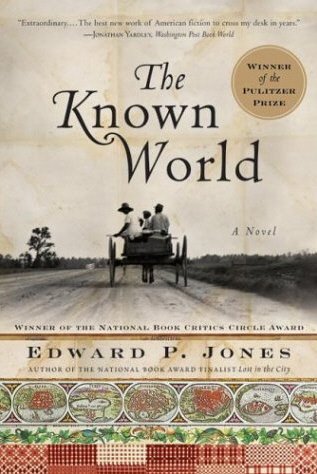
The Known World

I just finished "The Known World" by Edward P. Jones. A book this beautiful and profound deserves both recommendation and discussion here:

The Known World is by far the best book I have ever read by a living author. Edward P Jones' skill in painting character's lives and the world they inhabit is quite remarkable. The non-linear exploration of his characters makes for a mildly difficult but insightful read. Mr. Jones has rightly been compared to the brilliant William Faulkner. The Known World won the Pulitzer Prize for fiction, and if Mr. Jones continues to write like this he will almost certainly join Faulkner as a winner of the Nobel Prize.

The Known World tells the story of the fictional Manchester County Virginia in the years before the Civil War. The story centers around a freed slave named Henry Townsend who owns slaves and runs a plantation. The story explores Henry's entire world and the web of people in it. The story makes our common concepts of victims and abusers or race and class seem too trite and weak to explain the complex people of the story. The characters of the book are disconcertingly true to human nature. Even those who act monstrously are shown capable of incredible kindness, and even the most admirable of characters are rife with flaws and always in danger of falling from grace.

The crime of enslaving another human being is at the center of the story, but it is not a story "about slavery." The book examines our inherent bent towards misusing each other, of which slavery is one picture. Most of the book doesn't contain any intentional cruelty at all. The well-meaning people gradually created a world in which abuse and misuse is a part of life. It uncomfortably reminds the reader of how we often interact with each other in today's world. The author approaches his characters with such compassion that instead of righteous indignation we look on them with sympathy, "Father forgive them, they know not what they do." When chaos and violence finally erupts we can realize how easily it rose out of seemingly harmless acts of these well-meaning murderers.

Perhaps the most interesting aspect of this book for discussion are the characters who “knew better.” I think particularly of John Skiffington the kind and honest sheriff. Skiffington is a good man who knows enslaving another human is wrong, but finds no way to avoid that it is a fact of the world in which he lives. He tries to keep the world stable by living righteously and keeping unjust laws as justly as he can, but his seemingly innocent entanglements in the injustices around him bring about his fall from grace and the ensuing chaos. In the end the good sheriff is more responsible for the crimes than the slave owners or the violent men who knew no better way. I found this righteous sheriff the most tragic and disconcerting character in all The Known World.

In a world like our own where the undesired are terminated, the neighbors and children of our enemies are bombed in the name of security, and property is more important than relationships are we not the same? We modern, enlightened people read books about the world of slavery and say, “Well I would have definitely stood up against those injustices!” but The Known World shows how easy it is to live with evil as part of the fabric of the only world you have ever known. Even if we recognize the evils in the world around us, we tend to give our opposition lip-service while benefiting from the security or wealth they provide. Someone like myself with a tendency toward rants might be tempted to call The Known World a "call for action," but it would not be an honest look at the work. The generous Edward P. Jones doesn't ask his characters to save the world, he even forgives them as they are destroying it. Perhaps he hopes with a bit of introspection we might be a little better than our ancestors.

If you are looking for a fascinating read I highly recommend The Known World. If you have read it I would love to hear your thoughts on the book...