Showing posts with label race. Show all posts

Friday, July 24, 2009

Self-Control: Gates and Crowley

Sgt. James Crowley and Henry Louis Gates Jr. have become the source of ceaseless public discussion in the last few days. Both men were in a stressful situation. Both men got angry. Both men probably misjudged the other. Both felt so certain of the prejudices of the other that they became too offended to admit any misjudgment on their own part. Either could have ended the situation by simply calming down. Instead it escalated and now their argument is at the center of a media circus.

While race is still an issue in America, I think the real issue that needs to be discussed now is self-control. Two adults, who both should have known better, let their hurt feelings take over and lost control of themselves. The officer had all the real power in the incident. He had the authority and the weapon and he was up against an irritable small man who walked with a cane. He represented the people of the state, and he should have been more professional. Once he realized the error and that Gates wanted him out of the house he should have bit his tongue, apologized, and left. Since the incident Gates has had the power, since he is a famous man who knows the president and has the ear of the media. He is supposed to represent thoughtful academia. Since the incident he has used his influence to insult officer Crowley's character and motives. Crowley has responded in kind. Both men still refuse to back down. The issue at stake now is pride and ego. Both are willing to damage the reputation of whites and blacks, academics and police in order to win this battle of wills without apologizing.

I am trying to teach my toddler self-control. As a one-year old he responds to not getting his way by screaming and throwing things. It is childish behavior because he is a child. I hope to raise him to become young man with self-discipline so that even when he is misjudged or insulted he will not loose control and let himself mistreat others. This is what we should expect of any mature adult.

Race and misuse of power in America are being debated non-stop in this case. While these are issues worth discussion, the more important issue is that our nation is full of adults who are unwilling or unable to practice self-control. A police officer and an honored professor should both be acting like men not boys.

Friday, January 23, 2009

He's Not White Or Black

All the recent media coverage celebrating our “first black president” makes me recall an interesting article in the Washington Post entitled He's Not Black.

Being in a interracial marriage and raising an interracial son, debates on ethnic identity sparked by Obama's election have a sense of urgency to me. How do I raise my son to be himself when society cannot decide what he is?

Barack Obama calls himself “Black” although his mother was a white woman from Kansas. He has brown skin and coarse hair. He identifies himself as what he looks like rather than what he is. Obama was raised during a time of racial tension in America when those with mixed heritage were often stuck in a cultural no-man's-land. In a sense he was forced to pick a side. In his book “Dreams From My Father” he says that he felt as a young man that people that identified themselves as interracial were betraying their fellow blacks as just “ordinary niggers.” (His words)

That young man eventually got his bearings and achieved greatness. The America that elected him president is very different than the one into which he was born. The political tensions surrounding race have dissipated, something America seems to have only fully realized once a brown-skinned man became president. Cultural assumptions based on ethnicity, however, are as prevalent as ever. Jamie Foxx commented at an inaugural ball that Obama's dance moves were proof “we definitely have a black president.” We are right to assume that culture and upbringing have an effect on a person, but it is absurd when we assign cultural identities to a people just because of their skin. Obama was raised by a white Kansan mother in Indonesia, but that doesn't matter. He is just “black.” You are what you appear to be.

It is this racial destiny assigned by looks that gave me anxiety when my wife was pregnant. I wondered how I a white man would raise a son that was identified by everyone as a black man. An unusual genetic shuffle, however, produced the opposite of what I anticipated. If Barack Obama is black, then my son is certainly white. His skin is lighter than mine and his hair is very straight. Even thought he looks just her, people seem to assume his beautiful, black mother is his babysitter. Throughout his life people will think he is white and make assumptions about him based on assigning him to this racial group.

My son may be light-skinned but he is not white nor do I want him to be. Obama may be dark-skinned but he is not black even though he calls himself that. Even the American categories of “white” and “black” are imprecise groupings of people of many ethnicities that where artificially created to justify slavery and segregation. It is true that culture and family affect an individual, but assigning culture based on skin tone is backward. Perhaps eons ago when humans rarely moved one could make accurate judgments about lineage and culture just by looking at a person's features, but in our interconnected world assumptions based on skin are more likely to mislead than inform.

Obama described his first innocent encounters with the world when “I was too young to realize I needed a race.” He doesn't need a race, nor does my son. Nor does anyone. A person's physical description doesn't necessitate a cultural classification. My son will probably always be fair-skinned, but that doesn't make him white and it definitely doesn't make him less his mother's child. He is who he is, and he can be proud of all of his heritage without having to pick or have one assigned to him.

The Washington Post wrote “We are racially sophisticated enough to elect a non-white president, and we are so racially backward that we insist on calling him black. Progress has outpaced vocabulary.” Racism may be nearly eradicated but Race with all its presumptions and misjudgments is alive and well. We can discuss our cultures and bodies without needing to draw these artificial lines between us. I hope my son is proud of all of his family and his heritage. He doesn't need to claim a color in order to have identity. He is himself and that should be enough.

Friday, November 07, 2008

Hope and Politics

It is with mixed emotions that I congratulate Barack Obama on becoming the president of the United States. It is an historic landmark for America to choose a man with brown skin to be our leader. After listening to my wife's grandfather, the grandson of a slave, tell stories of all the discrimination he received as a soldier fighting for his country, I understand why America needed this—and why my African American wife was excited to vote for Obama. Obama really is a great man, and having a president capable of articulating a vision for America will be a welcome change after 8 years of a president who seemed incapable of explaining his ideas or decisions.

As proud as I am to have a president with a similar interracial makeup to my son, I am also dismayed that this president would have wholeheartedly supported us in killing our son 6 months ago if we had decided he was inconvenient—even offering government funds to help terminate him.

My wife says that I am foolish to hope for leaders that always guide us toward what is better. America will never choose a president like Joe Schriner. Politicians (at least the ones capable of being elected) won't or can't save America from itself. Perhaps trying to stop evils committed by our nation through voting is misguided. After all politicians only enable us to do the injustices to our fellow man that we have already decided as a society that we wish to allow.

This election cycle has me discouraged about the willingness of American to vote for any real improvement in this nation. Several state ballot measures to limit abortion lost badly. It seems that the much touted “values voters” are only really energized to ban gays from getting marriage licenses, but aren't willing to stop the murder of unwanted infants (just as most “pro-life” politicians haven't done a thing to limit abortions). The unpopularity of the war in the campaign was only rivaled by Obama, who opposed the war, falling all over himself to assure us that he is very willing to strike other countries. It seems voters don't have the stomach to accept the sacrifices required either for war or sustained peace. American voters seem to expect war to be convenient, easy, and bloodless—things war will never be. Obama had to repeatedly reassure voters that he will not “spread around wealth,” because Americans would not tolerate being required to share their means with the needy. In the end this election was about the economy. The results imply that Americans vote for their money and convenience; right and wrong doesn't factor into most voters decisions at all.

After spending a great deal of time on politics here at the Gridbook Blog I wonder if I have fallen into the pitfall of imagining that real change can be effected through government. This election has been touted as a reemergence of “hope” in the political process. As much as I admire Obama personally and what he symbolizes as an interracial president, I have very low hopes for him. Just as our nation gets beyond the horrors of racism, we only more deeply ingrain our policy of infanticide. Having seen first-hand the devastation of abortion, the fragility of human life, and knowing that Obama supports this atrocity makes me skeptical of all the other good intentions he has.

But perhaps this is the problem of hope in politics—we hope for too much. I had high hopes for Bush 8 years ago too, and he has been a sore disappointment. The problem isn't politicians. It is ourselves. Humans are naturally a violent and selfish species, and no law or government will undo this tendency. It can only be changed from the inside, supernaturally.

So I have learned to vote my conscience, but without as much hopefulness that the political process can cure the ills of our society. Rather than hoping for the law to enforce social justice, non-violence, equality, and treatment of all with dignity, perhaps I must work harder to live out these values in my daily interactions. I may not change the world, but if I change the lives of a few people it will likely be worth more than every vote I ever cast.

Sunday, February 17, 2008

A Tragic Mulatto

While my overwhelming feeling about our son we expect to be born this summer is joy, I have also have some of the self doubt that likely affects all new parents. One particular concern is the complexity of race my son will face:

Why is the biracial child always supposed to be a tragedy stuck between two worlds? Historically it was typically the white parents that hid these inconvenient results of affairs (Strom Thurman). Now the typical scene is older white grandparents raising a mixed child after the dissolution of the relationship that brought it about. Certainly the acceptance of these children that were once viewed as proof of the crime of miscegenation (or even rape) has improved in recent decades, but they are still often viewed as problematic in-between people. While the virulence of Racism (the belief that race makes a person superior or inferior to others) has become exceedingly rare, the problems of race in America—prejudice, misunderstanding, inequality, resentment, interpretation of history—are far from resolved. Here in Clarke County, Georgia there is still a palpable division between black and white populations. While much of racial integration in the United States may be producing a melting pot, here it still quite obvious on a drive through Athens that “haves” and “have nots” are still mostly divided by race.


So I will be a white father to a son that everyone will usually identify as African American. He will be biracial, but in most people's minds that will count him as black (eg: Haley Berry and Barack Obama both have one Caucasian parent). He will carry the cultural weight of expectations based solely on his skin color. He will have people expect him to be somehow better at sports, more sexual, cooler, tougher, more rhythmic, and less interested in learning. These are the expectations (even admirations) that our society puts on black boys. He will be informed by people that barely know him that he has been wronged by crimes committed years before his birth, and because of this he must act or identify himself in way to amend these ills. He will be told by others that he must be a individual, and any identification with any ethnicity or appeal to his unique dilemmas as a biracial man is nothing but weakness or whining.


But what will his father tell him? I am a product of my own place and I have never known many of the pressures my son will face. I wish I could say that my own experience of interracial marriage has helped me “figure out” the complex and often unspoken rules and taboos of race in today's America, but I have no great wisdom to offer my son.


What he will have for certain is two parents who know themselves and will love each other and him deeply. Beyond the self-knowledge he will have from the experience of his home, I'm not sure he will have much education on the confusing situation he will inherit. I suppose like most children he will have to figure out his identity on his own.


Monday, September 24, 2007

Southern Racism: Community and Evil

While I am quite glad to be back in the deep South, I cannot help but notice the racial tensions, which -while improving- still exist in communities here. I expect that someday I will need to teach my children how to live with an injustice that will focus particularly on them as children of mixed race.

This is an piece I wrote in my gridbook back in 1999:


I saw a documentary on the Ku Klux Klan last night on television. I was disturbed as an American and as a human being watching the history of the Klan, but as a Southerner the disturbance struck a deeper cord. It is a history of my own crimes.

Although have lived in the South my whole life, I have never even seen a Klansman, but I have always heard about them. They dwell in the recesses of our thoughts like some endangered animal on its way to becoming a mythical creature. There were a couple of boys in middle school that told everyone they were Klansmen to try to impress people, but we all suspected they were lying. Even the Klan wouldn’t want thirteen-year-old boys with cracking voices. But maybe the Klan was accepting pubescent boys; according to the documentary their membership has been rapidly dwindling over recent decades. Most Northerners seem to assume that every white Southerner has a white-hooded costume in his closet and just can’t wait for a black family to move into his neighborhood so he can light a cross on their lawn. Misconceptions constructed from made-for-TV movies frame our problem incorrectly. The Klan has been a minuscule fraction of Southerners ever since Reconstruction ended. Like all problems of Southern life our Klan problem is more insidious and ambiguous.

Growing up in Georgia the only times I have seen images of Klansmen outside a Hollywood production were the rare public rallies, which never failed make the evening news. These rallies never lived up to their film counterparts. They were pitiful little groups of bland looking men wearing white sheets carrying Confederate and US flags. They would stand up and give grand speeches for the news cameras as if they were rallying troops. The ranks, however, were never more than a dozen men, who were doing their best to look bold and determined, acting as if they didn’t notice the group of onlookers that gathered around them to watch the rare spectacle and disapprovingly shake their heads. The existence of the Klan itself wasn’t much of a shock for me. They were nobody I knew, and no one approved of them. The Klan may be a part of us, but only a small and insignificant part. I realize that that tiny cancerous growth among us is responsible for much evil. Those few hateful men have done horrendous and shameful acts that make us all shudder, but I suspected that every human society has within it some comparable vicious element.

No, it was not the Klan among us that disturbed me, it was our toleration of it. I fear that we in the South have developed a strange ambivalence toward evil. The South is somewhat unique that we still sense our connection to the past. Northerners associate themselves with the past, but they are not connected to it. They can read a history book and commend all the good things and denounce all the bad. That seems to be the only level at which the American individualist can associate with the past, as if changing your name could make you no longer a descendant of your ancestors. But our Southern soul, in spite of our American mind, is reluctantly tied into the idea of a culture, which was given birth rather destroyed at Appomattox. Our minds are all American: bold and iconoclastic, democratic and unsuperstitious. But our reluctant hearts are haunted by the ghost of a defeated nation, in which we all retain citizenship. And it is no loose confederation, but a union so strong that it somehow diffused through the humid air we breathed as children. Lost causes and the defeated nations are the secret framework of our minds. Like most ghosts, it is ethereal and usually invisible. Love it, hate it, or deny it, a Southerner can no more exorcise the haunting of the past and present South than he can drain his body of its blood. It comes to him when he walks at night or in the back of his imagination during an account of history. Somehow he is tied to it all: the guilt of slavery and lynchings as the well as the stubborn glory and resilience of the great Southerners. The ability to simultaneously experience both pride and self-loathing is both the talent and the burden anyone raised within Southern culture. Our heritage comes as a package deal, and even if the Southern son consciously rejects it all and moves away, it will secretly follow him all his life, like a disturbing dream that he can’t quite remember, but cannot forget either.

It was this same sense of connection to history that gave birth to the Klan. Now they are a small and pitiful reflection of the Southern pathos from which they took their life. They have fully embraced the evil of their heritage, and thus become a wicked and abortive thing. The problem of the Klan is that it is a wicked and abortive thing that is a part of us, like at tiny cancer growing too deep within our own body to be easily extracted, deeply centered among our most sensitive nerves and vessels. We cannot bring ourselves to fully hate it. So we in the easygoing South have learned to tolerate it. We cannot extract an evil that is part of ourself, so we ignore it.

It was not the acts of violence and hatred from the Klan that disturbed me about our history. It was the Southerners’ protection of this thing within us. Not a protection from any love or respect, but the sort of protection one gives to an infected wound, shielding it from any touch. I began watching the documentary as it was accounting the history of the Ku Klux Klan from the 1950’s. Every once in a while some Klansmen would commit an atrocity against a black person or a young Northern civil rights worker. The Klansmen would get arrested and a famous Northern civil rights lawyer would come down to stand for justice and righteousness in the face of Southern racism, and the juries composed of white non-Klan Southerners would free the obviously guilty Klansmen. Why? I could not understand how such a thing could happen. The Klan at that time had only fifteen thousand members in the whole country: a pitiful amount. Most Southerners wanted nothing to do with the Klan. How did juries of twelve Southern whites always contain so many sympathizers with the evil and hatred of the Klan? I know racism is common here, but almost usually in its milder forms --Southerners are more likely to admit their prejudices and thus must confront them, and fortunately Southerners even manage to be hypocritical even in our racism, often making friendships with those we claim we dislike. Had I been wrong? Do more of us share that deep and soul-destroying hatred that rapes and murders and applauds those who do?

After pondering the shameful acts of those juries, I suddenly saw what I had missed. Just as I had longed to somehow justify these unjustifiable juries in my mind, these juries longed to pardon the unpardonable crimes of the Klansmen before the northern lawyers and northern press. Why did we defended the guilty among us? Because we were family. I cannot know for sure, but perhaps it was the same feelings that made the all-black jury in LA declare O.J. Simpson not guilty. It did not matter how many bloody bodies might have been covered with his DNA; they saw a family member surrounded by outsiders. I used to fear what would become of my stubborn younger brother, and I must admit no matter what horrible thing he could have done, if he had come to me on the run I would have hidden him. I could never betray my own brother to an outsider no matter what evil he might have committed. It would tear my heart out to hand him over to justice.

Look here and see, I have done it: I have rationalized even the mockery of justice, because I had to. I am connected to it. Southernness is a familial thing—a tie that binds us into one culture, which although imperfect, is the only thing separating us from being just like the rest of the country, which would be intolerable. Disowning any time or any one is disowning the whole family. It is both a flaw and triumph of my psyche that I cannot accept my heritage except as a unified whole, and like quite a few of us I can no more disown it than I could disown my own self.

Southerners, of course, are not blind to evil. It seems that we have an acute sense for evil, because we have lived in close proximity to it for so long. Who hates a broken family more than the child who has grown up in one? And who loves his broken family more that same child? He knows better that anyone that his sister is promiscuous and that his father is abusive. And he lives with the anger and the lust that he so hates. He is also close enough to admire his father's strength and his sister's tenderness and to sense that their virtues and vices are tied. Does he wish his sister to be virtuous and his father kind? More than anyone else could possibly know. But bring in an outsider... let someone come in from outside to impose change, pointing fingers, calling his sister a slut and his father a beast. Watch him! Watch how close he draws to them. How the child stands before them to defend them! “Go ahead mess with us! See what happens! My father is old, but strong and brutal enough to send you out on your back. Mess with my sister? I hope you catch every disease she’s got!” See how his shame rises violently to defend the very ones that shame him most!

It is easy to hate evil at a distance, to walk into another’s house and point fingers. It is much harder when the evil is a part of your family, when it is even a piece of yourself. Don’t you know that as he grows older he is haunted by his own face in mirrors? He may be proud of the stubborn strength and longing tenderness he has inherited along with his shame, or he may have run away from them and changed his name –either way he will always recognize them in his own features. By looking into his own eyes he will know both the broken heart of his sister and the fiery rage of his father, and he will dread that some day some vile thing he has hated will arise within himself.

The white Southerners are the past embodied in the present. We are both pride and shame, both the good and the evil. I cannot deny my part in all of this, just as I cannot deny my own brother. I do not wish to deny my brother. There is so much value in him, and yet there is much about him that makes me hang my head in shame. He is a piece of me, and I am a piece of him. We were born from the same womb. Although we constantly shame each other, breaking up the family (dismantling our Southern culture) is not an option I could accept. Yes, we Southerners are guilty of many things. We have loved our sins. We have loved our sins as if they were our virtues, because we have been afraid we might be forced to exchange them for Northern sins. But our sins must be burned away. The modern American may ignore the sins of his culture and his history. But our Southern sins are living and rooted within us all; we must all dig deep and painfully draw them out. Forgive us for our reluctance, we wish to salvage the virtues that are so intricately entwined with the evils. Our strange psychology runs deep, but there is a value there as well, because it costs more this way. No one can have a loathing for racism stronger than that of the white Southerner, because for him to hate racism he must also hate a part of himself.

Tuesday, October 03, 2006

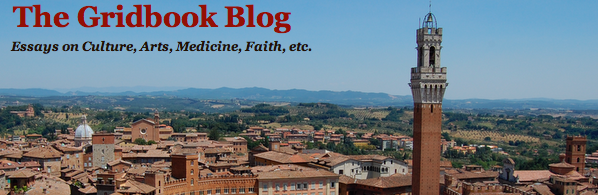
The Known World

I just finished "The Known World" by Edward P. Jones. A book this beautiful and profound deserves both recommendation and discussion here:

The Known World is by far the best book I have ever read by a living author. Edward P Jones' skill in painting character's lives and the world they inhabit is quite remarkable. The non-linear exploration of his characters makes for a mildly difficult but insightful read. Mr. Jones has rightly been compared to the brilliant William Faulkner. The Known World won the Pulitzer Prize for fiction, and if Mr. Jones continues to write like this he will almost certainly join Faulkner as a winner of the Nobel Prize.

The Known World tells the story of the fictional Manchester County Virginia in the years before the Civil War. The story centers around a freed slave named Henry Townsend who owns slaves and runs a plantation. The story explores Henry's entire world and the web of people in it. The story makes our common concepts of victims and abusers or race and class seem too trite and weak to explain the complex people of the story. The characters of the book are disconcertingly true to human nature. Even those who act monstrously are shown capable of incredible kindness, and even the most admirable of characters are rife with flaws and always in danger of falling from grace.

The crime of enslaving another human being is at the center of the story, but it is not a story "about slavery." The book examines our inherent bent towards misusing each other, of which slavery is one picture. Most of the book doesn't contain any intentional cruelty at all. The well-meaning people gradually created a world in which abuse and misuse is a part of life. It uncomfortably reminds the reader of how we often interact with each other in today's world. The author approaches his characters with such compassion that instead of righteous indignation we look on them with sympathy, "Father forgive them, they know not what they do." When chaos and violence finally erupts we can realize how easily it rose out of seemingly harmless acts of these well-meaning murderers.

Perhaps the most interesting aspect of this book for discussion are the characters who “knew better.” I think particularly of John Skiffington the kind and honest sheriff. Skiffington is a good man who knows enslaving another human is wrong, but finds no way to avoid that it is a fact of the world in which he lives. He tries to keep the world stable by living righteously and keeping unjust laws as justly as he can, but his seemingly innocent entanglements in the injustices around him bring about his fall from grace and the ensuing chaos. In the end the good sheriff is more responsible for the crimes than the slave owners or the violent men who knew no better way. I found this righteous sheriff the most tragic and disconcerting character in all The Known World.

In a world like our own where the undesired are terminated, the neighbors and children of our enemies are bombed in the name of security, and property is more important than relationships are we not the same? We modern, enlightened people read books about the world of slavery and say, “Well I would have definitely stood up against those injustices!” but The Known World shows how easy it is to live with evil as part of the fabric of the only world you have ever known. Even if we recognize the evils in the world around us, we tend to give our opposition lip-service while benefiting from the security or wealth they provide. Someone like myself with a tendency toward rants might be tempted to call The Known World a "call for action," but it would not be an honest look at the work. The generous Edward P. Jones doesn't ask his characters to save the world, he even forgives them as they are destroying it. Perhaps he hopes with a bit of introspection we might be a little better than our ancestors.

If you are looking for a fascinating read I highly recommend The Known World. If you have read it I would love to hear your thoughts on the book...